
What Is Mapo Tofu and Why Is It So Popular?
- Feb 12
- 4 min read
If you’ve ever browsed through Chinese menus or eaten at Sichuan restaurants, you’ve probably seen mapo tofu listed among the classics. Even though our family comes from Guangzhou and our cooking is Cantonese at its roots, we often get questions about mapo tofu from curious customers in Barry. It’s a dish that stands out for its bold flavour, striking appearance and the way it balances soft, silky tofu with a deeply savoury sauce. People often want to know why it’s so famous, why it tastes the way it does, and whether it’s meant to be as spicy as they’ve heard.
For us, mapo tofu represents one of those iconic dishes that tells you a lot about a region’s character. Cantonese food tends to focus on fresh ingredients and light seasoning, but Sichuan cuisine, where mapo tofu originates, is all about heat, fragrance and layers of flavour. Over the years we’ve tasted many versions of it in China and abroad, and each one gives a slightly different experience depending on how much chilli, Sichuan peppercorn or minced meat is added. That versatility is part of what makes the dish so enduringly popular.
Understanding mapo tofu isn’t just about the recipe itself - it’s about the history, the cooking techniques and the way it travelled across the world. In this blog, we’ll share where the dish comes from, what makes it unique, why it has become a favourite internationally, and what to expect if you try it at a UK takeaway or restaurant.
The history of mapo tofu and its Sichuan roots
Mapo tofu comes from Chengdu, the capital of Sichuan province in south-west China. The story goes that it was first created in the late 1800s by a woman nicknamed “Mapo,” which loosely translates to “pockmarked grandmother.” She ran a small food stall and became famous for serving a tofu dish that combined beef or pork mince with chilli bean paste, fermented black beans and Sichuan peppercorns. What started as a humble street food grew into one of the most celebrated icons of Sichuan cooking.
The region’s food is built on intensity: garlic, ginger, fermented sauces and dried chillies give depth, while the numbing quality of Sichuan peppercorns creates a distinctive contrast. Mapo tofu reflects all of these elements, which is why it became such a representative dish of its province and has stood the test of time.
Ingredients and flavours that define authentic mapo tofu
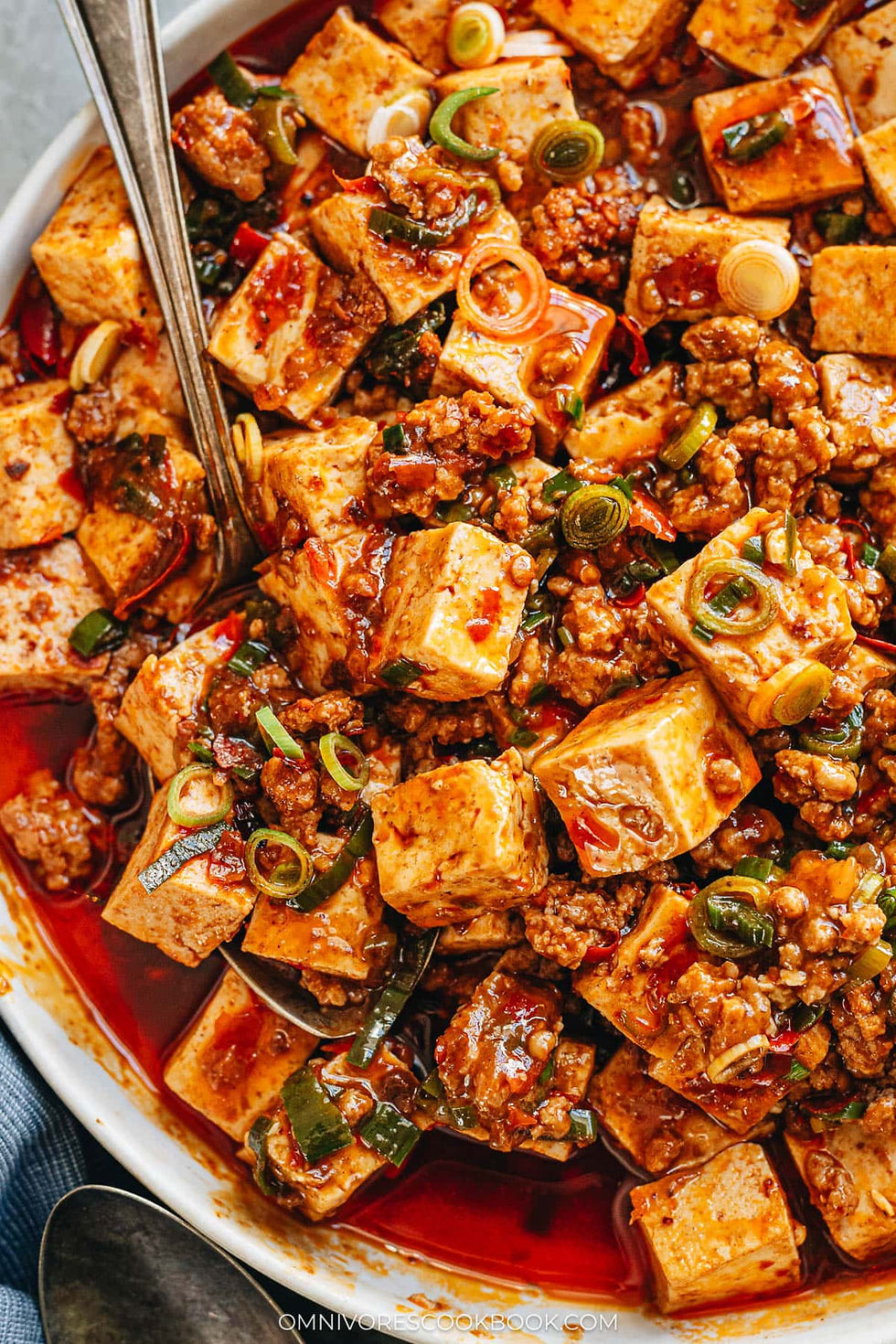
At its core, mapo tofu uses simple ingredients, but the way they come together makes it extraordinary. Silken or soft tofu provides a delicate texture that absorbs the sauce, while minced beef or pork adds a savoury depth. The foundation of the sauce is doubanjiang, a spicy fermented broad bean and chilli paste that delivers both heat and umami. Fermented black beans, garlic and ginger bring further layers of flavour, while stock rounds everything into a glossy, rich consistency.
The defining ingredient, though, is the Sichuan peppercorn. Unlike chilli, it doesn’t burn but instead leaves a tingling, numbing sensation on the tongue. This contrast of numbing and spicy, known locally as mala, is what makes mapo tofu instantly recognisable. When combined with the smooth tofu and savoury sauce, it creates a balance of textures and tastes that no other dish quite matches.
Why mapo tofu became popular worldwide
One of the reasons mapo tofu spread beyond Sichuan is its adaptability. Cooks can adjust the heat to suit different palates, use pork, beef or even mushrooms, and tailor the consistency of the sauce. Because tofu itself is neutral in taste, it acts as a blank canvas for all these powerful flavours, making it appealing to both adventurous diners and those trying tofu for the first time.
It is also visually striking. The bright red of the chilli sauce against the pale tofu cubes, topped with green spring onions, makes it a dish that people remember. Its popularity has grown alongside the global rise of Sichuan food, which has been embraced for its bold and uncompromising flavours. Mapo tofu is often the gateway dish that introduces people to the wider world of Sichuan cuisine.
How to enjoy mapo tofu at its best
Traditionally, mapo tofu is served with plain steamed rice. The rice soaks up the rich sauce and tempers the heat, making the dish more balanced. In Sichuan, it’s usually one of several dishes on a shared table, but it also works well as a main meal on its own.
For anyone trying it for the first time, we’d recommend a medium spice level. That way, you still get the authentic malasensation of chilli and peppercorns without it being overwhelming. The best versions of the dish always balance spice, savouriness and the numbing peppercorns in a way that feels powerful but not overpowering.
Conclusion
Mapo tofu is more than just a popular dish - it’s a symbol of Sichuan cooking and a reminder of how varied Chinese food really is. From its humble beginnings in Chengdu to its place on restaurant menus around the world, it has earned its reputation as a classic. For us, it represents a side of Chinese cuisine that is very different from the Cantonese dishes we cook daily, but equally important in showing the full breadth of flavours Chinese food has to offer.


